


How Much Land Do You Really Need?
Have you ever caught yourself scrolling through beautiful properties online, imagining a little cabin tucked into the trees, a garden full of fresh vegetables, or a quiet place to escape the noise of everyday life?
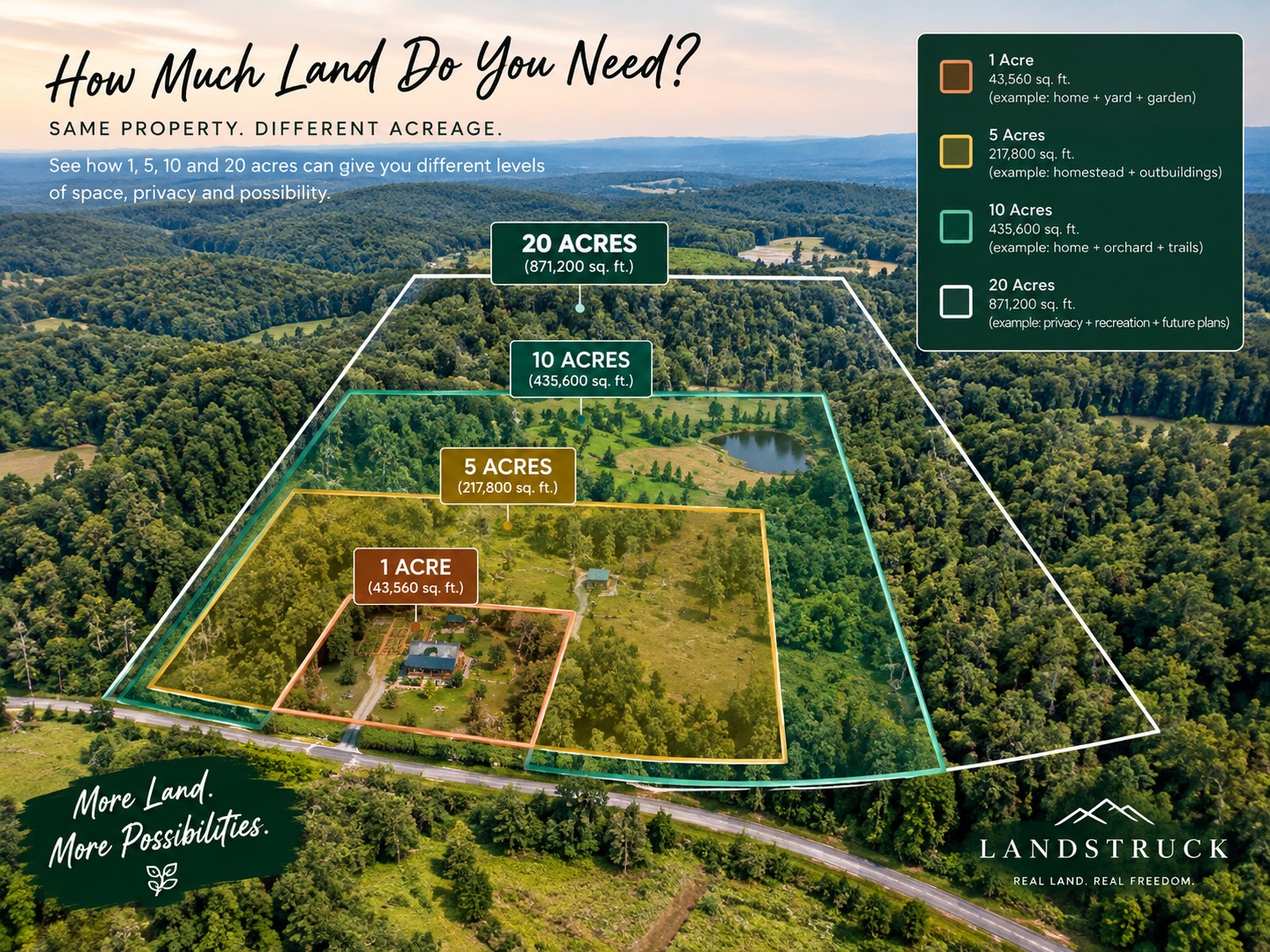
Then comes the big question: How much land do you actually need to make it happen? One acre might sound like plenty until you start imagining a house, a garden, a workshop, and a little breathing room. Twenty acres might sound like a dream until you consider how much of that land you will realistically use. The truth is, there is no perfect acreage for everyone. The right property depends on what you want to do with it, how much privacy you want, your budget, and the type of lifestyle you envision. Let’s break down what 1, 5, 10, and 20 acres can offer, what to consider before buying, and how to find the right amount of land for your plans.
First, What Does an Acre Actually Look Like?
1 Acre: A Little Space to Call Your Own
One acre can be a great starting point for someone who wants a home with outdoor space without taking on the responsibility of maintaining a large property.
Depending on the layout, terrain, local requirements, and property restrictions, one acre may provide room for a house, a yard, raised garden beds, a small greenhouse, a shed, or an outdoor entertaining area. It’s an appealing option for people who want a little more breathing room than a typical suburban lot offers. What could you do with one acre?
- Build a home with a yard and outdoor living space.
- Grow vegetables, herbs, and a few fruit trees.
- Create a small backyard homestead.
- Keep a workshop or garden shed.
- Enjoy more separation from neighbors, depending on the surrounding properties.
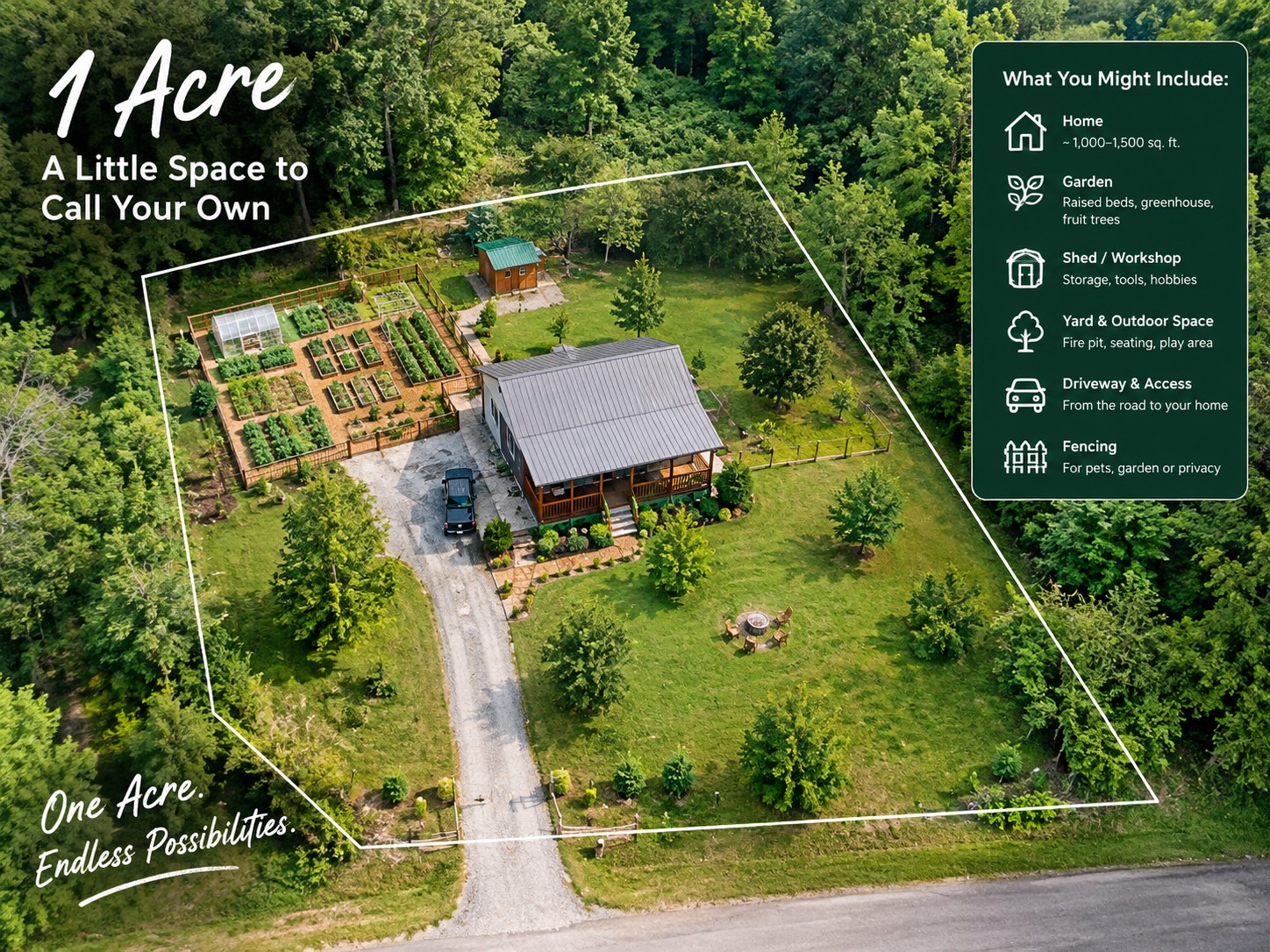
Remember that the usable portion of an acre can be smaller than you expect once you account for the house, driveway, drainage, septic system, setbacks, and other site requirements.
Best for: Buyers seeking a manageable property, a home with outdoor space, or a modest garden and homestead setup.
5 Acres: Room to Start Building Your Dream
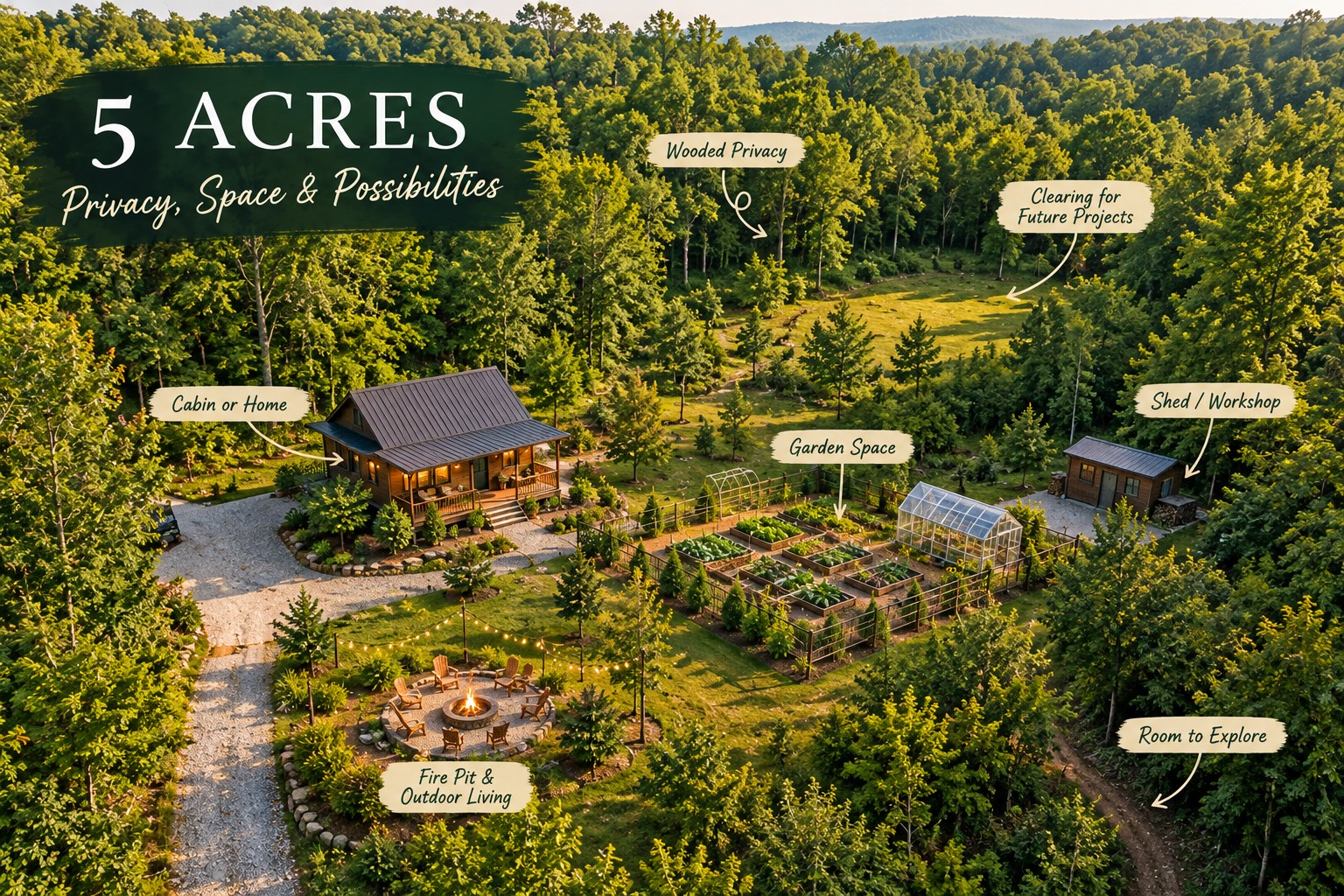
Five acres gives you more options for arranging your property. You might have a home near the entrance, a garden behind it, a clearing for outdoor activities, and wooded acreage beyond.
Depending on the land and local requirements, five acres may also provide room for a small orchard, a workshop, a greenhouse, a chicken coop, or recreational space. What could you do with five acres?
- Create a garden and plant fruit trees.
- Build a home or establish a private weekend retreat.
- Enjoy space for hobbies, outdoor recreation, and storage buildings.
- Explore a modest homesteading setup.
- Keep some of the property wooded for shade, wildlife, and privacy.
It can also be a practical choice for someone who wants to develop a property gradually. You might start with a driveway and a small garden, then add a home, workshop, or orchard as your budget allows.
But don’t assume every five-acre parcel can accommodate every project. Terrain, access, soil conditions, water availability, and local rules can make a significant difference.
Best for: Buyers who want more privacy and flexibility without committing to maintaining a very large property.
10 Acres: More Space, More Possibilities
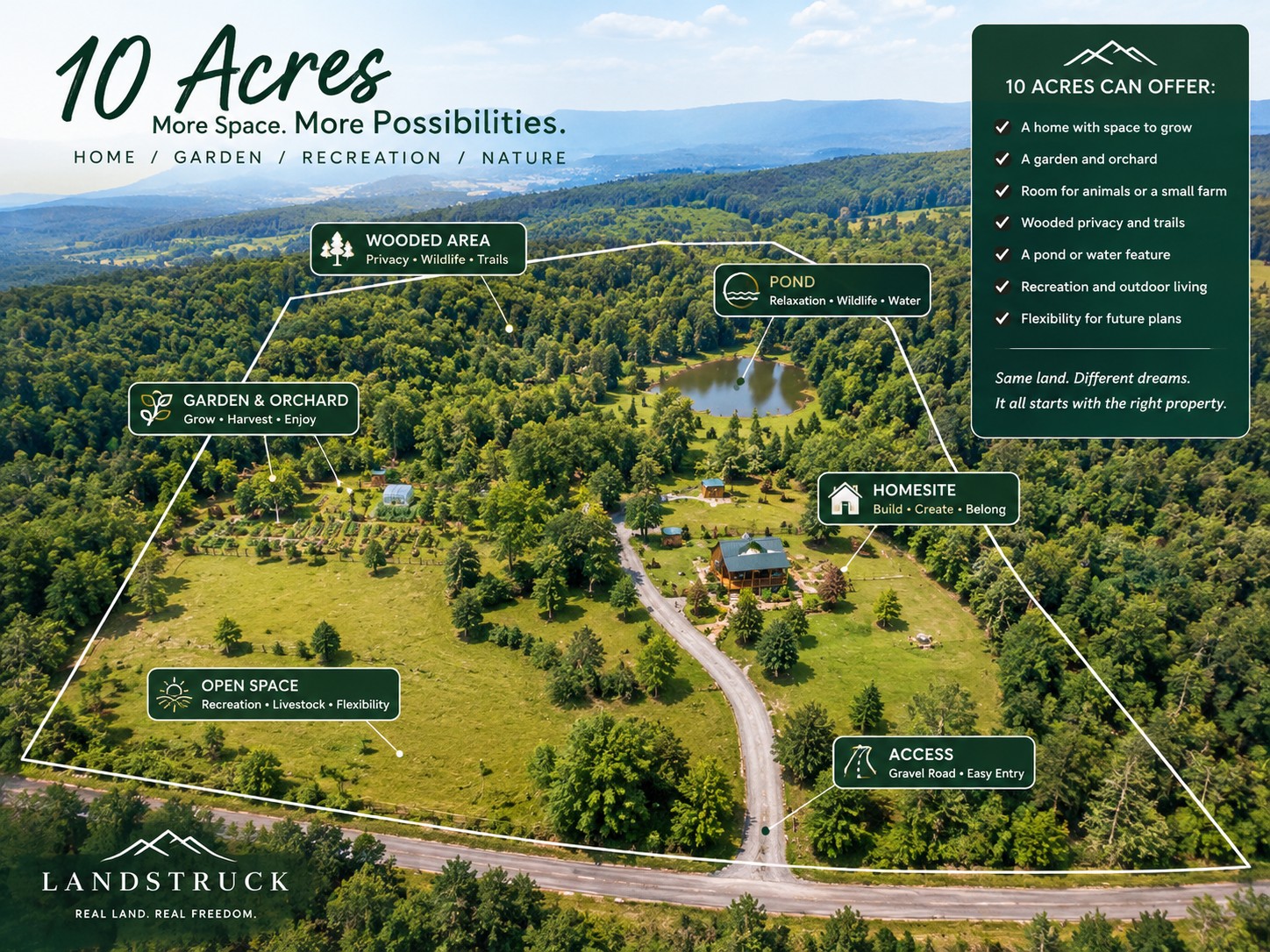
Ten acres opens the door to a broader range of possibilities, especially if you want your property to serve several purposes.
You could envision a home near the road, a garden and orchard closer to the house, a workshop or barn in a suitable location, and additional acreage for trails or recreation.
You may also have more flexibility in deciding which portions of the property to clear and which to leave wooded.
What could you do with ten acres?
- Develop a larger garden and food forest.
- Explore small-scale livestock or pasture, where suitable and permitted.
- Create walking trails and outdoor recreation areas.
- Build a workshop or additional outbuildings where allowed.
- Preserve wooded areas for wildlife and natural privacy.
- Set aside space for future projects.
It can be especially attractive if you don’t want to develop the entire property at once. You can focus on the areas you use regularly and leave the rest largely natural.
However, more acreage doesn’t automatically mean more usable land. Ten steep acres may offer fewer practical building or gardening options than five flatter acres.
There is also more ground to maintain, inspect, and manage if you decide to clear trails, control invasive plants, or maintain fencing.
20 Acres: Space to Think Bigger
Best for: Buyers who prioritize space, privacy, recreation, larger homesteading projects, or long-term flexibility.
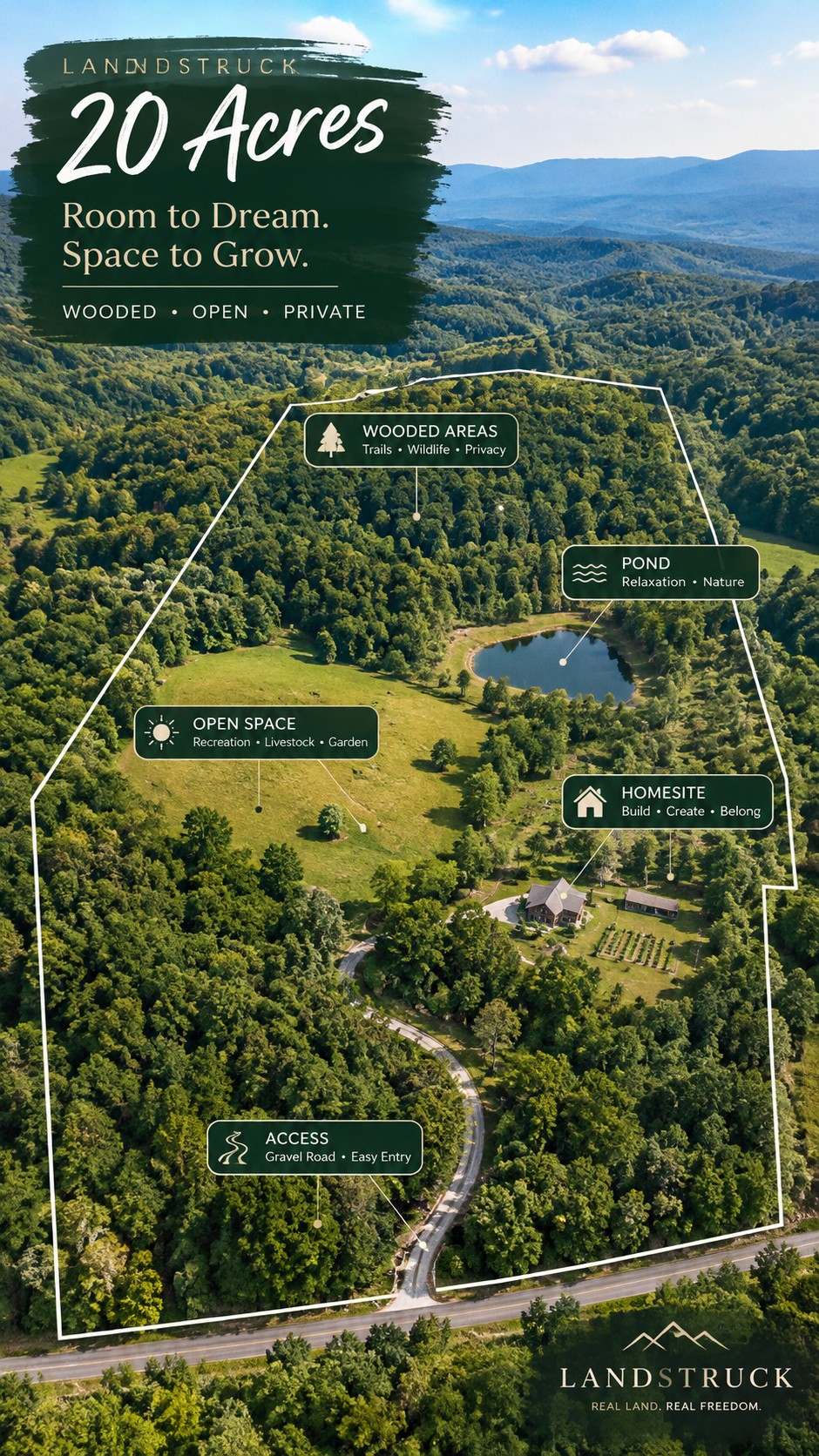
If your dream includes substantial privacy, a larger homestead, extensive gardens, wooded trails, or simply having plenty of room to explore, twenty acres may be worth considering.
With this amount of land, you may have greater flexibility to separate different activities. Your home and garden could occupy one area while other portions remain wooded, provide recreational space, or accommodate future projects.
What could you do with twenty acres?
- Establish a larger garden, orchard, or food forest.
- Explore suitable pasture or livestock areas.
- Create trails and recreational spaces.
- Keep a substantial portion of the property natural.
- Spread out buildings and outdoor activities, where permitted.
- Leave room for future plans you haven’t even thought of yet.
One of the biggest advantages of twenty acres is flexibility. You don’t have to use every part of the property immediately, and you may have more options for how to organize your space over time.
The trade-off is that a larger property may cost more to purchase and maintain. Fencing, road improvements, equipment, clearing, and managing a larger area can add up. A bigger parcel can also contain terrain that is difficult or impractical to develop.
The Secret: Usable Land Matters More Than the Number
Imagine two properties for sale.
The first has five acres of relatively gentle terrain with a good access road and a suitable area for a homesite.
The second has ten acres, but much of it is steep, difficult to access, or crossed by drainage features that limit where you can build.
Which is the better buy?
That depends on your goals, but it illustrates an important point: twice the acreage doesn’t necessarily mean twice the usable space.
Before purchasing, consider these five factors:
1. Terrain and Topography
Walk the property if possible. Look at the slopes, ridgelines, low areas, and natural drainage paths.
A sloped property may offer beautiful views and privacy, but building pads, driveways, and site preparation can require more work.
Ask whether the areas you want to use are accessible and suitable for your intended plans.
2. Water and Drainage
Think about how you will obtain water and how rainwater moves across the property.
Are you planning to use a well, a spring source, rainwater collection, or another system? Investigate the feasibility, cost, and applicable requirements before relying on any particular source.
A creek can be a wonderful feature, but its presence doesn’t automatically establish a dependable household water supply or give you unrestricted rights to use it.
3. Septic and Building Feasibility
If you plan to build a home, don’t assume that a property is suitable simply because it has plenty of acreage.
Soil conditions, available space, topography, and applicable regulations can affect septic feasibility. In Tennessee, a septic system construction permit is required for a new system, and the site must be evaluated through the appropriate process.
Before purchasing, investigate whether the property can accommodate your proposed home and wastewater system.
Learn more through the Tennessee Department of Environment and Conservation’s septic system information.
4. Road Access and Utilities
Consider how you will reach the property and what improvements may be needed.
Is there legal access? Is the road suitable for the vehicles and equipment you expect to use? How far away is electricity, if you want it? What would it take to bring utilities to your intended homesite?
If you’re planning to live off-grid, investigate your solar potential, water options, and access needs just as carefully.
5. Restrictions and Local Requirements
Before purchasing, verify the applicable zoning, building requirements, deed restrictions, and other rules that may affect your intended use.
Even a property advertised as unrestricted may still be subject to state and local requirements.
The goal is to make sure the land fits your plans before you commit to buying it.
If traditional land financing isn’t the right fit, explore LandStruck’s Frequently Asked Questions to understand how we make owning land a reality without a credit check or a bank.
Don’t Forget Your Budget
It’s tempting to stretch your budget for a larger property because the extra space seems too good to pass up.
But the purchase price is only one part of the picture.
Depending on the property and your plans, you may also need to budget for a driveway, clearing, a homesite, septic, water, power, fencing, or other improvements.
A smaller property that already has the features you need could be a better fit than a larger parcel that requires substantial development.
Think about both what you can afford to purchase and what you can afford to do with the property afterward.
So, How Much Land Do You Really Need?
Start with your vision, not the acreage number.
If you want a home, a garden, and a little outdoor space, one acre might be enough.
If you want a private retreat or a modest homestead, five acres may offer the balance you’re looking for.
If you have bigger plans for gardening, recreation, or future development, ten or 20 acres could give you more flexibility.
Take your time, make a list of your priorities, and investigate the property itself rather than relying on acreage alone.

Ready to Find Your Piece of Land?
Your plans don’t have to look like anyone else’s. Maybe you want a weekend escape in the woods. Maybe you’re planning a homestead, looking for room to build, or simply ready for a little more space and independence.
Whatever your vision looks like, the right place to start is with a clear idea of what you need and a property that fits your goals.
Explore LandStruck’s available properties to compare acreage, locations, property features, and financing information.
Sometimes, the first step is simply finding the right piece of ground.
Before purchasing, independently verify property boundaries, legal access, suitability for your intended use, applicable requirements, and all costs associated with development.